The Summury
Table of Content
- Operators
- Loops
Operators
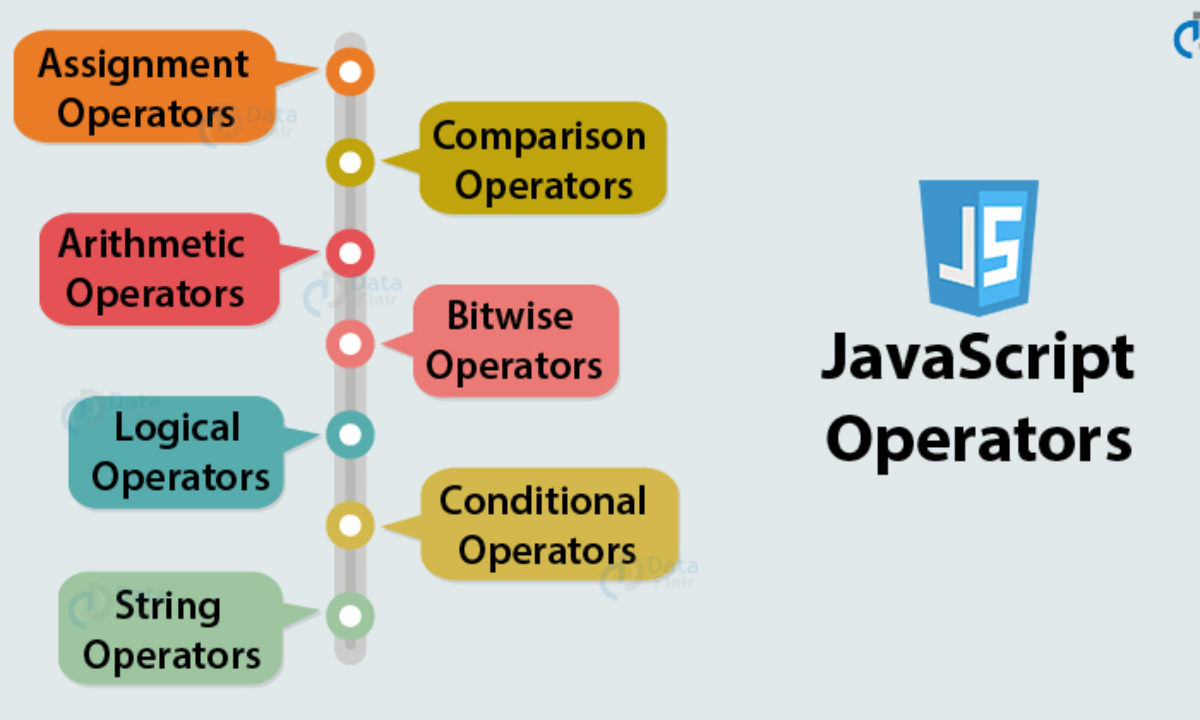
JavaScript has the following types of operators. This section describes the operators and contains information about operator precedence.
- Assignment operators
- Assignment operators An assignment operator assigns a value to its left operand based on the value of its right operand. The simple assignment operator is equal (=), which assigns the value of its right operand to its left operand. That is, x = y assigns the value of y to x.
- Comparison operators
- A comparison operator compares its operands and returns a logical value based on whether the comparison is true. The operands can be numerical, string, logical, or object values. Strings are compared based on standard lexicographical ordering, using Unicode values.
- Arithmetic operators
- Arithmetic operators An arithmetic operator takes numerical values (either literals or variables) as their operands and returns a single numerical value. The standard arithmetic operators are addition (+), subtraction (-), multiplication (*), and division (/). These operators work as they do in most other programming languages when used with floating point numbers (in particular, note that division by zero produces Infinity). For example:
- Conditional (ternary) operator
Loops
Loops offer a quick and easy way to do something repeatedly. This chapter of the JavaScript Guide introduces the different iteration statements available to JavaScript.
- for statement
- A for loop repeats until a specified condition evaluates to false. The JavaScript for loop is similar to the Java and C for loop.
A for statement looks as follows:
for ([initialExpression]; [conditionExpression]; [incrementExpression])
-
A while statement executes its statements as long as a specified condition evaluates to true. A while statement looks as follows:
-
while (condition)
- The condition test occurs before statement in the loop is executed. If the condition returns true, statement is executed and the condition is tested again. If the condition returns false, execution stops, and control is passed to the statement following while.
If the condition becomes false, statement within the loop stops executing and control passes to the statement following the loop.